The Linux desktop
developers deserve.

Aurora OS is a beautiful, macOS‑inspired desktop on the rock‑solid Debian base, with your tools ready on day one. Free, open source, and yours to shape.

Version 0.1 · 64-bit PC · Free forever

Private AI, built in
Undo any update
90 dev tools, one click
Steam, Windows & Android apps
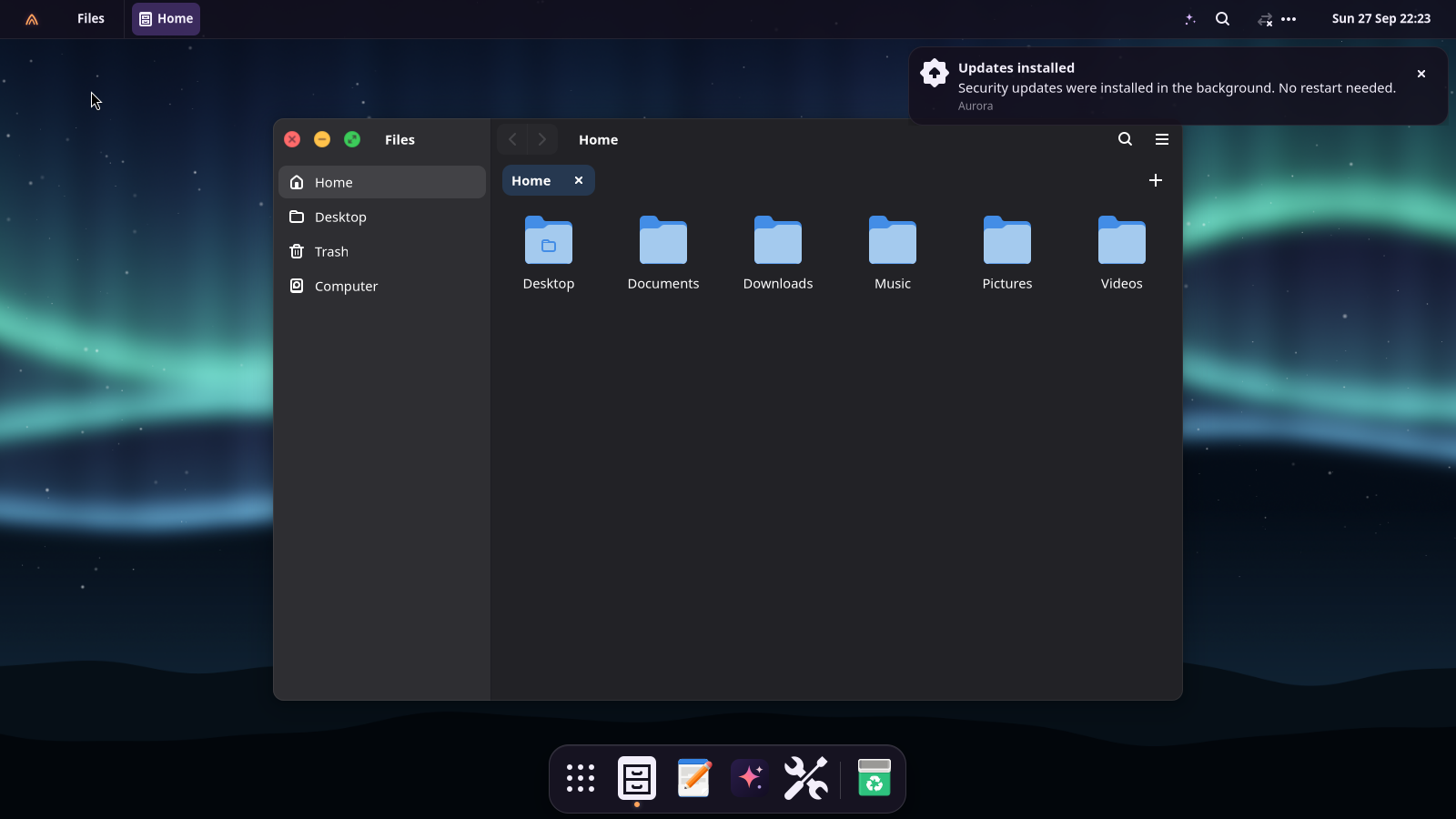
The Aurora OS desktop with the menu bar, dock and Files app
Debian 13stable base & security
49 appsready out of the box
90 toolsone click in Dev Hub
20 languagesfrom the boot menu
0 telemetryyour data stays yours

Why I built Aurora

Just for fun.

Aurora OS isn't a company's product. Ever since I was a child I've wondered what it actually takes to make an operating system: not an app, but the whole thing, a computer that starts up, installs itself and greets you with a desktop you'd enjoy using every day.

Aurora is my answer, built for the joy of understanding every layer, from the boot loader to the pixels of the dock, and of making the desktop I'd want for myself.

Read the whole story →

Designed down to the icon

Every app, folder and file,
drawn for Aurora.

Why people switch

Calm on the surface.
Powerful underneath.

Everything a daily desktop needs, the things other distros leave you to set up, and a few you won't find anywhere else.

Beautiful by default

Everything where your hands expect it.

A menu bar on top, a dock at the bottom, and one key to find anything. Aurora's desktop is written from scratch and designed down to the last pixel.

Spotlight, for everything

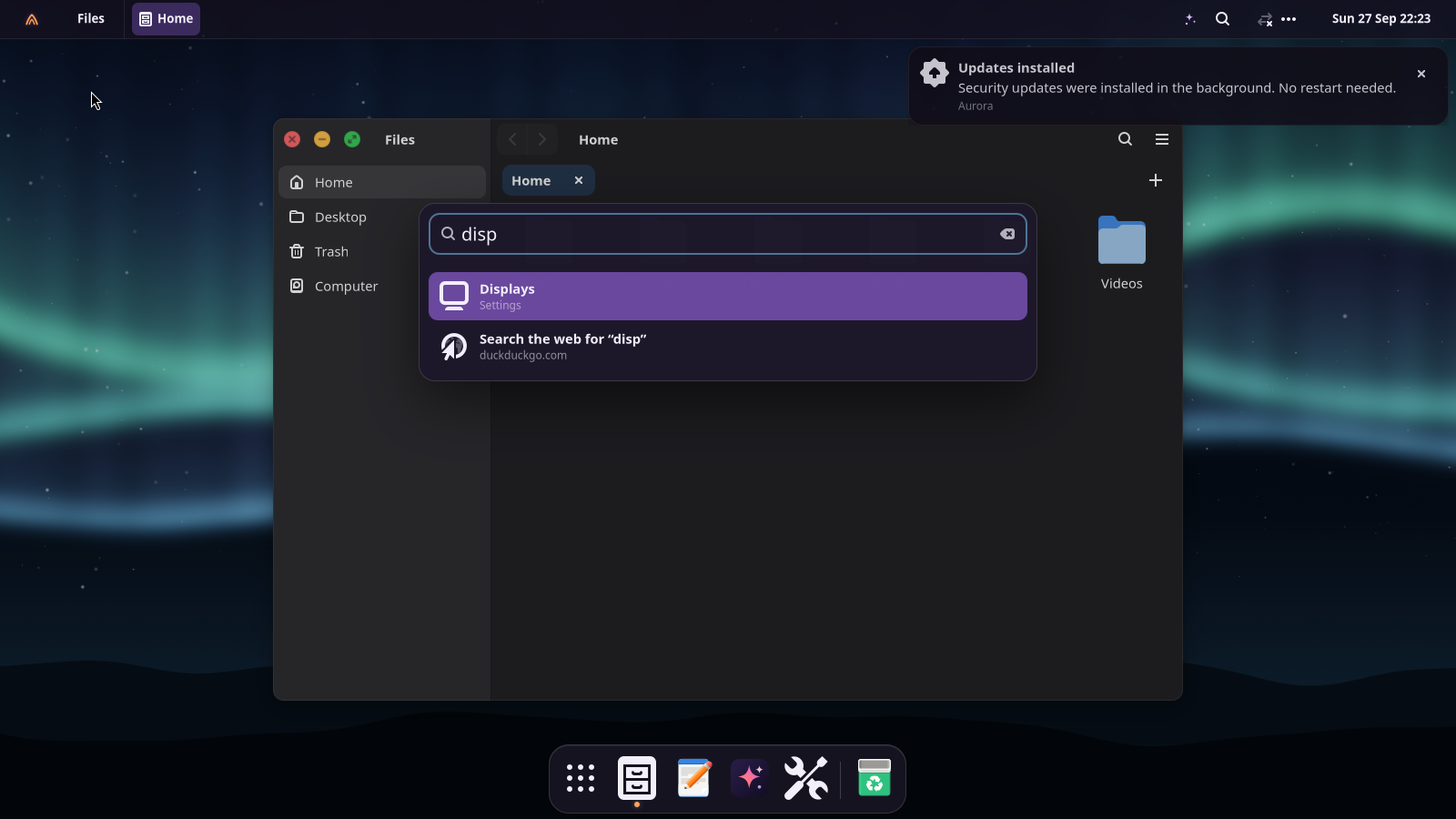
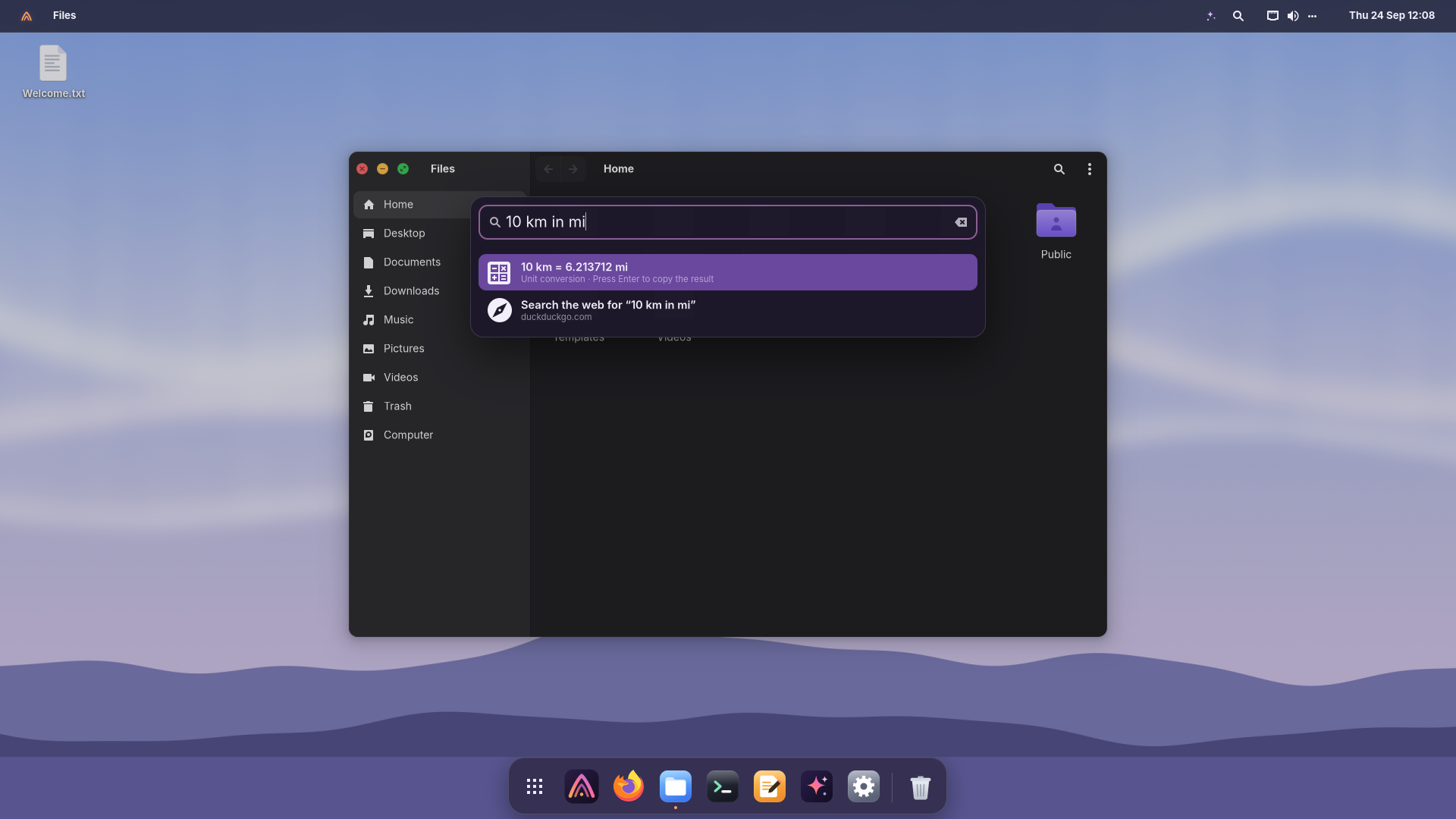
Tap Super and start typing. Apps, settings, recent files, your git projects, a calculator, terminal commands (> htop) and web search all live in one box. Enter opens the top result.

  • Finds settings by what they do: type “wifi”, “dark”, “keyboard”
  • Math and conversions as you type: 12*(3+4), 10 km in mi, 100 usd in eur
  • Emoji with :rocket, and your clipboard history with Super+V
  • Right-click apps, files or projects for pinning, file actions and project workspaces.
  • Everything runs on your computer. Only currency rates are fetched, from the European Central Bank.
Spotlight search showing apps and settings Spotlight converting 10 km to miles

Quick Look

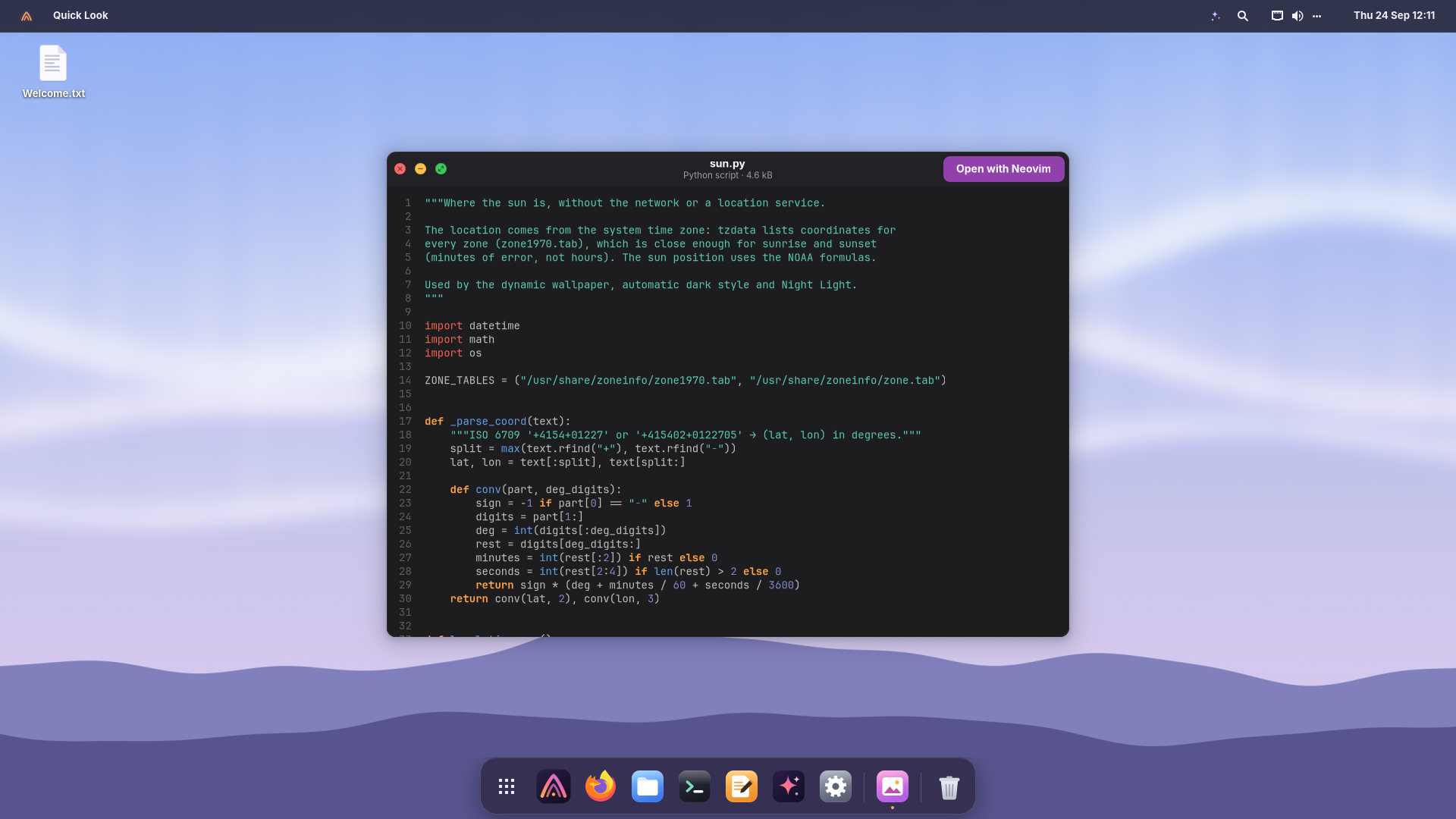
Select a file and press Space. Photos, videos, PDFs and source code open instantly in a preview, with syntax highlighting for code. The arrow keys move to the next file, and Space closes the preview.

Quick Look previewing a Python file

All your windows at a glance

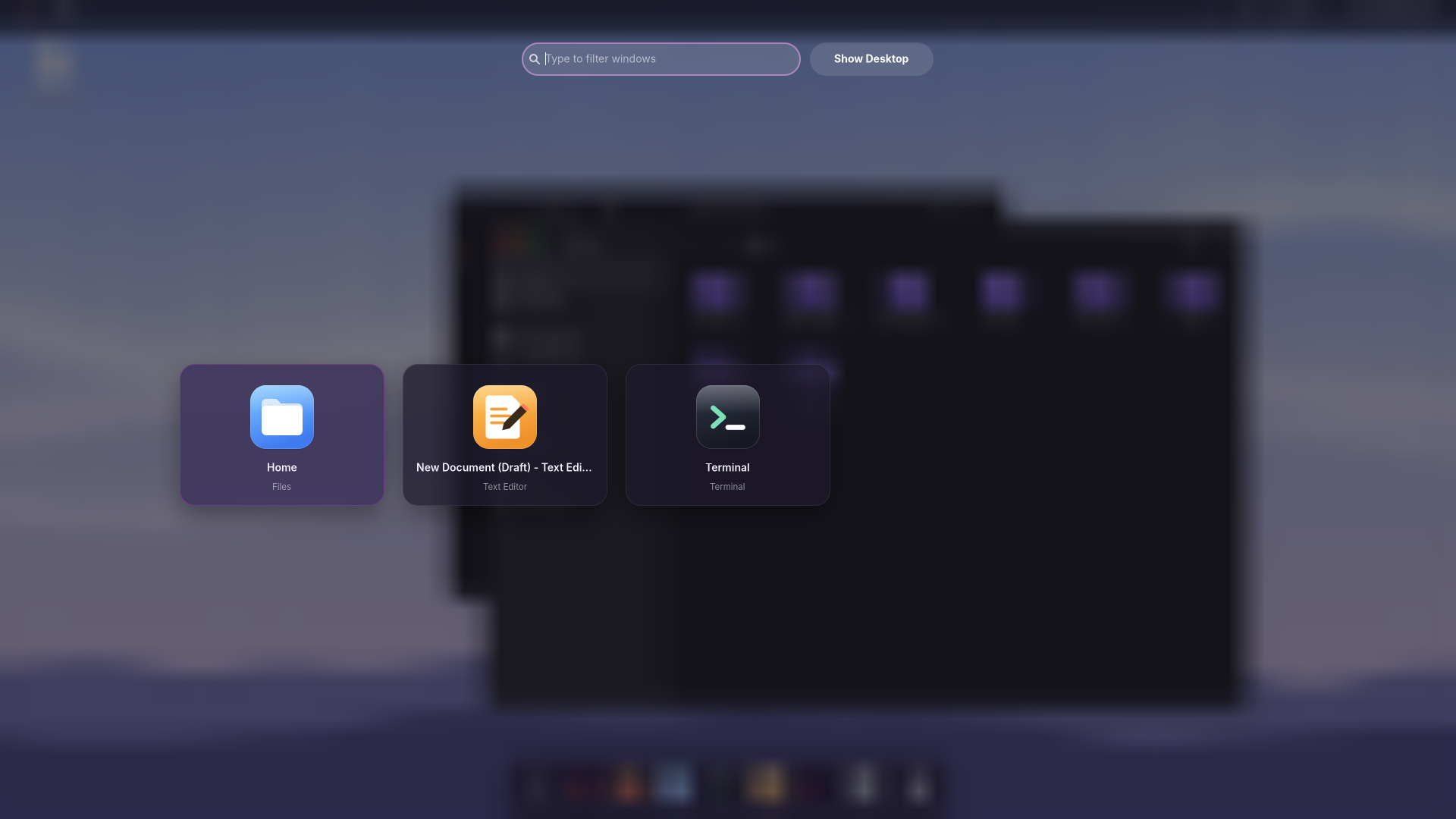
Press Super+W, or push the pointer into the bottom-left corner, and every open window lays out in front of you. Type to filter, click to jump. The bottom-right corner shows the desktop. Pick what each corner does in Settings.

  • Snap windows to halves, quarters and thirds from the keyboard
  • Or hold Super while dragging and drop them into place
The overview showing every open window

A desktop that follows the sun

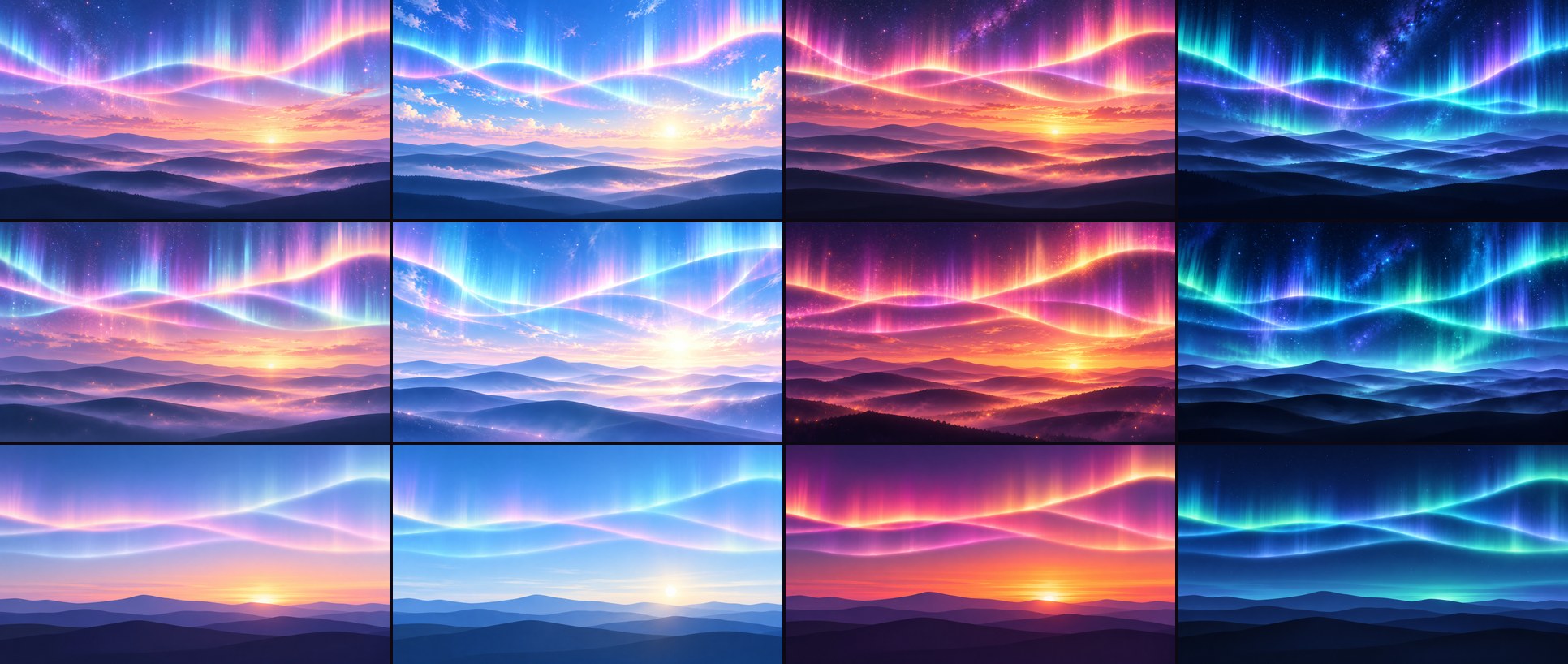
The Aurora landscape changes with the time of day, from dawn to a starry night, and fades gently from one to the next, in three painted series to choose from: Starfall, Veil and Horizon. Set the style to Auto and Aurora goes dark at sunset and light again at sunrise. Night Light warms the screen in the evening.

  • Sunrise and sunset come from your time zone, no location service involved
  • The login and lock screens follow along
The Starfall, Veil and Horizon wallpapers at dawn, day, dusk and night

A dock you'll want to touch

Pinned and running apps, a smooth magnification effect, Launchpad and the Trash. Right-click an icon for its windows and quick actions, or drag the pointer across it and watch it breathe.

  • Launchpad shows every app in a full-screen grid
  • Put it at the bottom or on either side, floating or full width
  • Auto-hide, icon size and magnification are yours to set
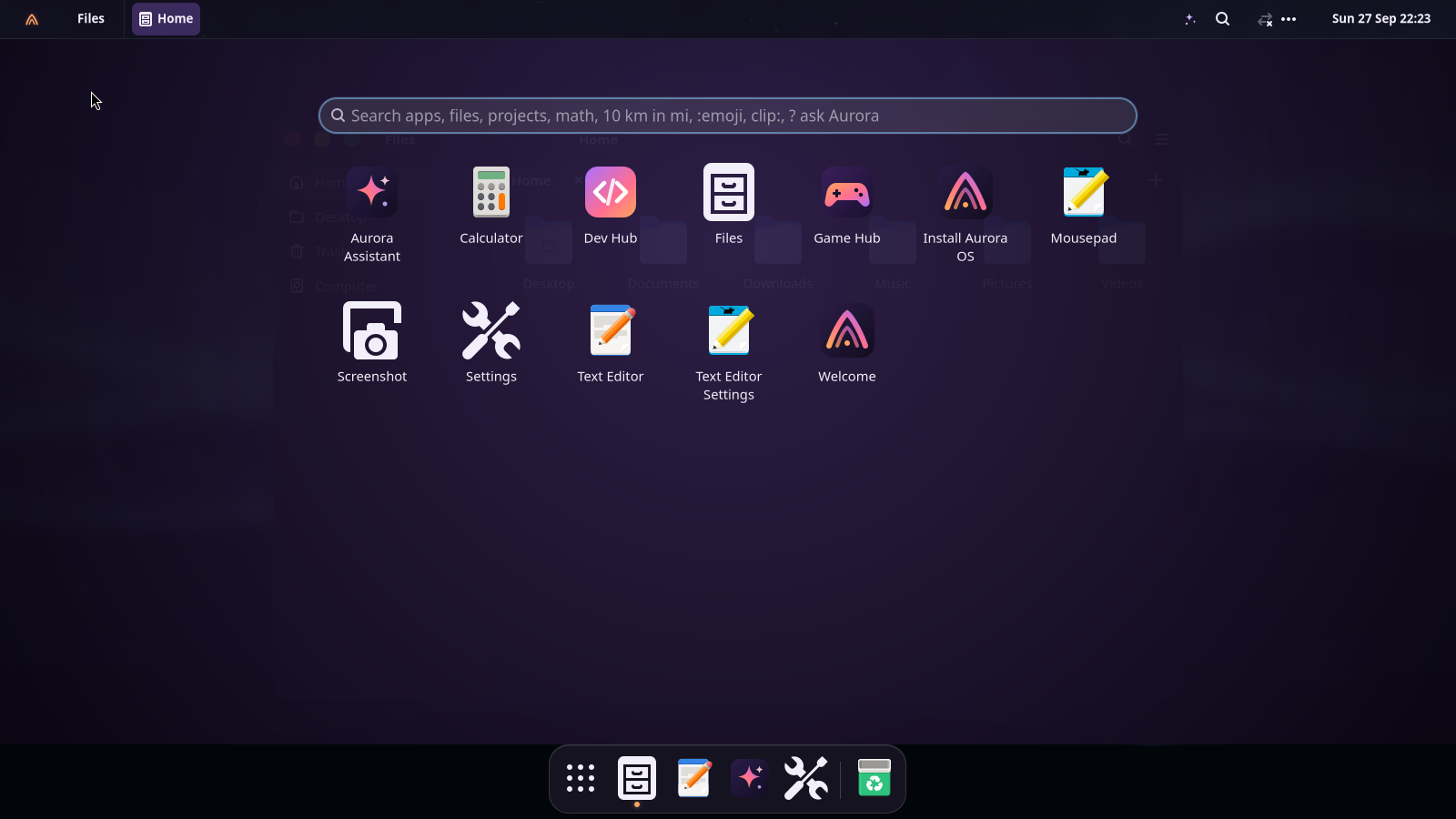
Launchpad with every installed app

Control Center

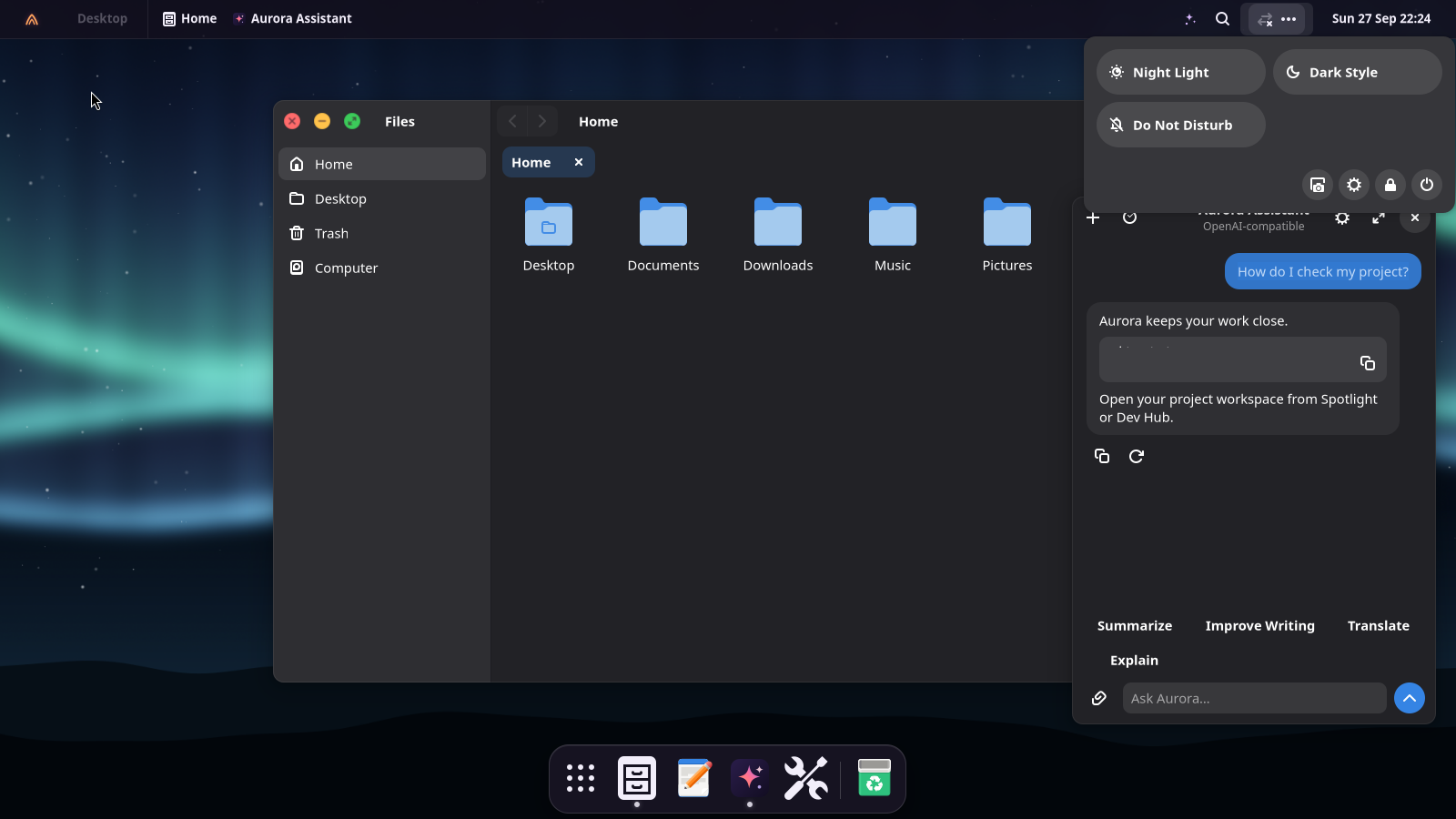
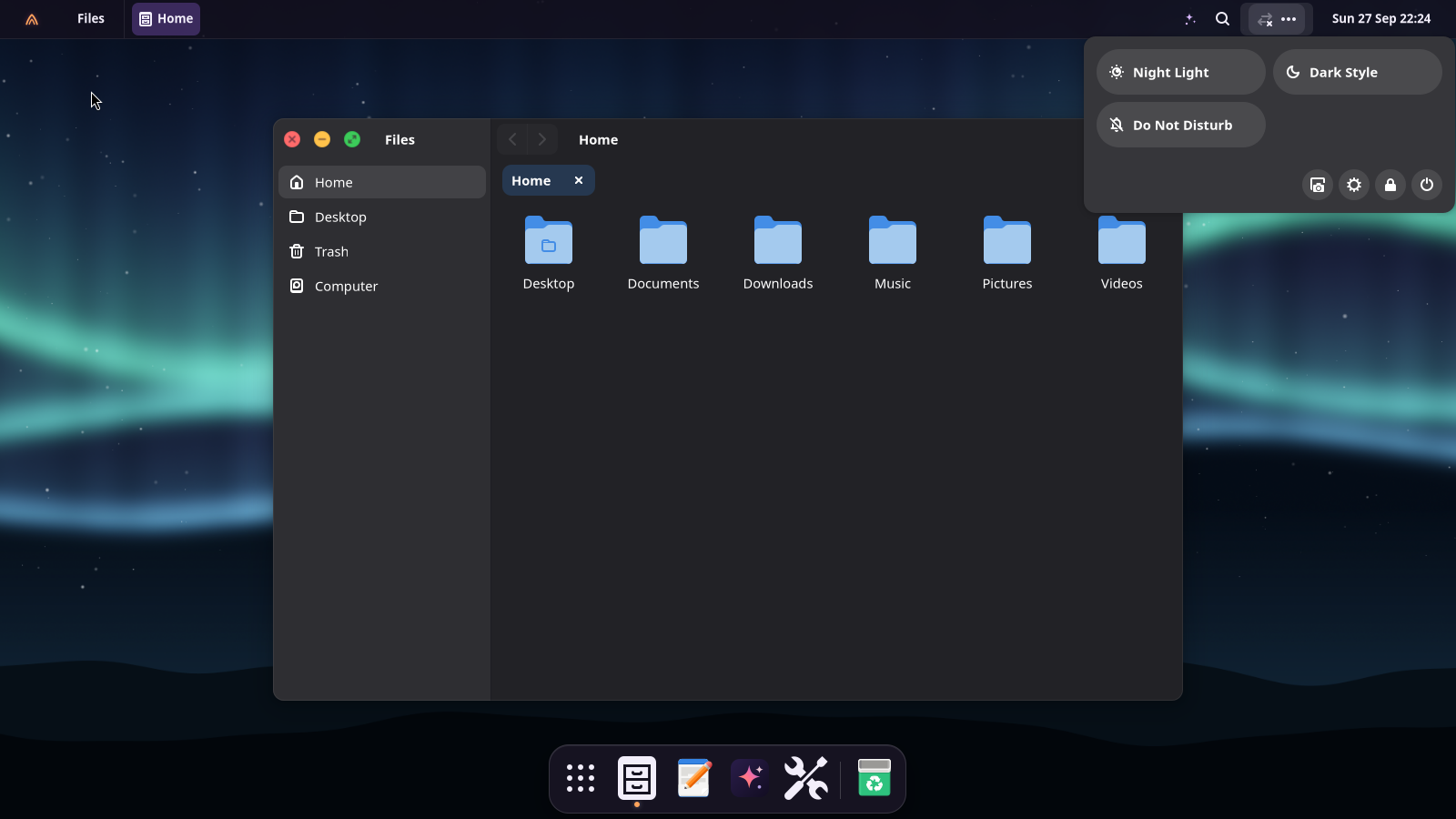
Everything you reach for, one click away: volume and output device, microphone, brightness, Wi-Fi and Bluetooth with their device lists, power mode, night light, dark style, Do Not Disturb, airplane mode, screen recording and media controls.

The Control Center with toggles and sliders

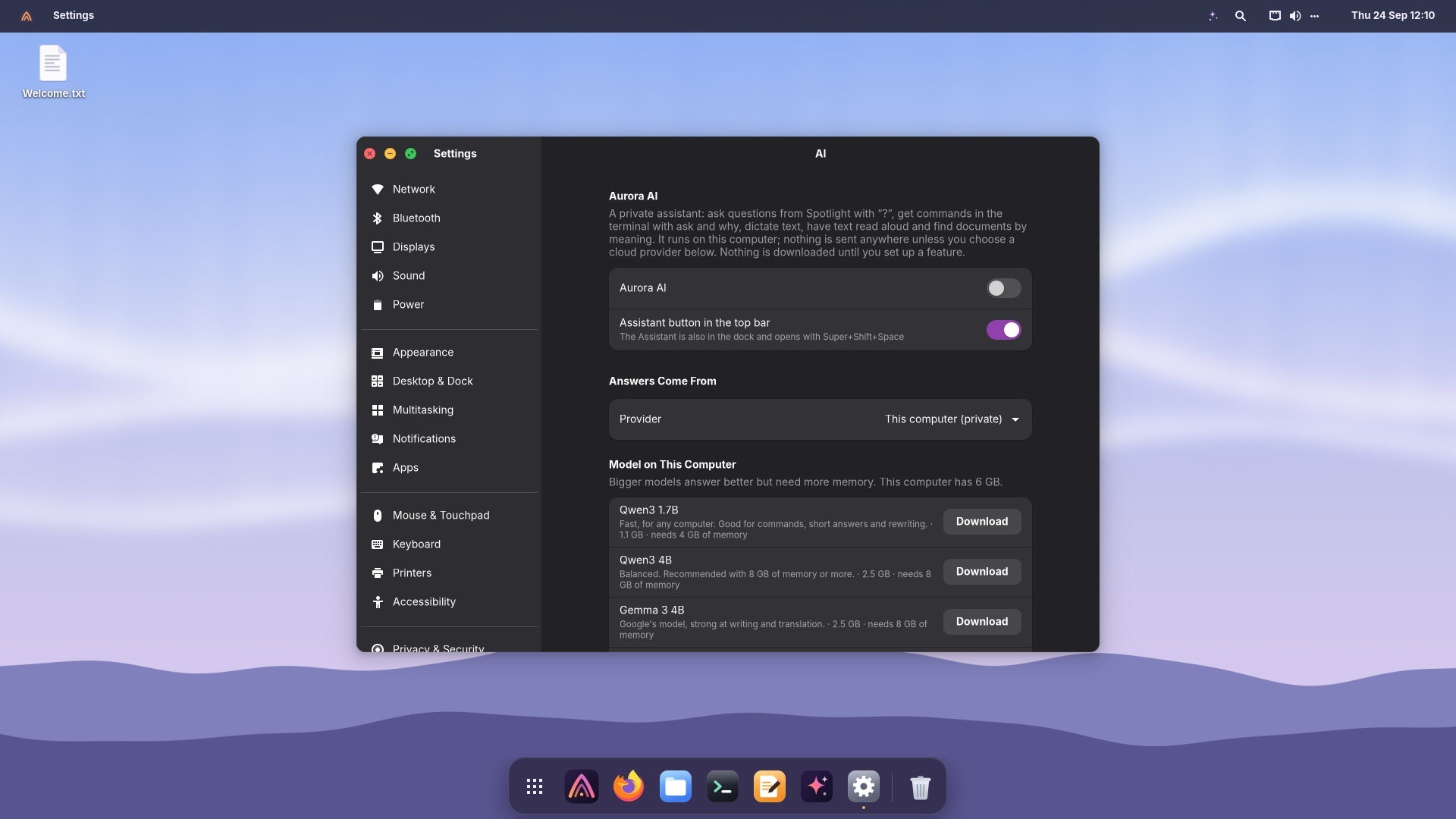
Aurora AI

A private assistant, built in.

Ask from Spotlight with ?, fix and rewrite any text with Writing Tools, get the right command in the terminal with ask, dictate, have text read aloud, and find documents by what they're about. It runs on your computer, or with Claude or another service if you prefer. Chats are saved locally; files and photos can be attached only to the local model. Off until you turn it on.

The Assistant floating in the corner over Files
The Assistant floats beside your work, like picture-in-picture
Settings → AI
Choose where it helps, which model, and which languages

Make it yours

Four layouts. One click. Endless tweaks.

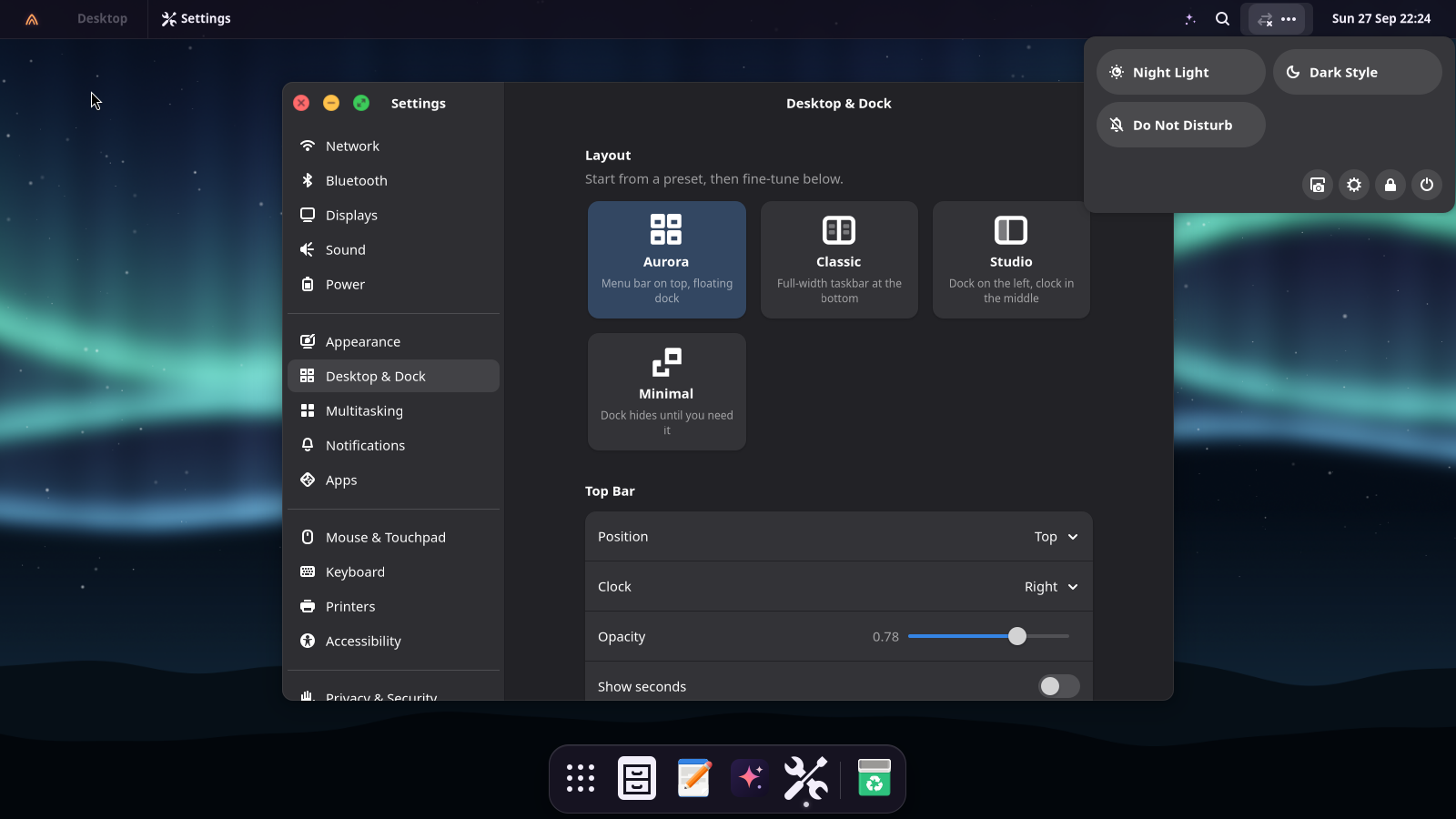
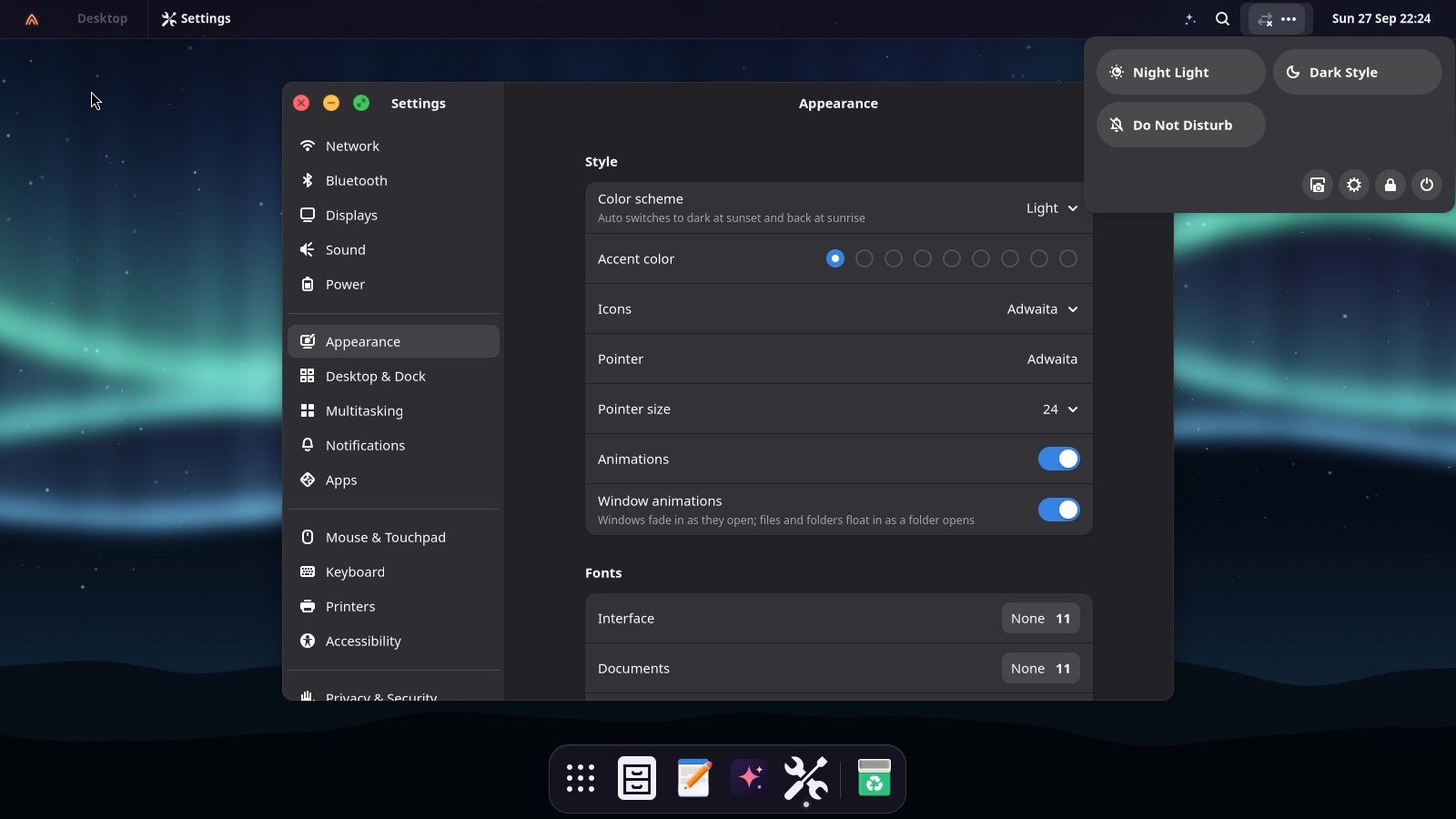
Start from a preset, then change anything: bar and dock position, icon size, window buttons, corner radius, fonts, pointer, icons and accent color.

Menu bar on top, a floating dock with magnification, round colored window buttons.

Aurora layout
Desktop & Dock settings with layout presets
Settings → Desktop & Dock
Appearance settings: style, accent color, fonts
Settings → Appearance

Built for developers

Open the terminal. Start working.

No afternoon of setup. The essentials are already installed and configured, and heavier toolchains are one click away, always at their latest version. More for developers, and Game Hub →

Terminal
~/code/api  main py 3.13
❯ git pull && docker compose up -d
✔ Container api-db-1   Started
✔ Container api-web-1  Started
~/code/api  main took 3s
❯ portop
 PORT   PROTO  PROCESS      SERVICE / CONTAINER
 5432   tcp    postgres     api-db-1
 8000   tcp    uvicorn      api-web-1
 3000   tcp    node         —
 [k] kill  [o] open  [f] filter  [,] settings

Preinstalled and configured

gitlazygitdeltabuild-essentialgdbcmake Python 3 + pip, venv, pipxNode.js + npmDocker + Compose Podmandistroboxneovimtmuxripgrep fdfzfbatbtopjqhttpie direnvstarshipzshshellcheckportoppkgtui JetBrains MonoFira Code

Ptyxis, the terminal, has tabs, profiles and one-click shells inside your distrobox, toolbox and podman containers. Add an informative prompt (git status, language versions, command duration), Ctrl+R fuzzy history and sensible aliases. Docker starts on first use, so it costs nothing at boot.

portop shows what's using every port (process, systemd service or Docker container) and stops it with one key.

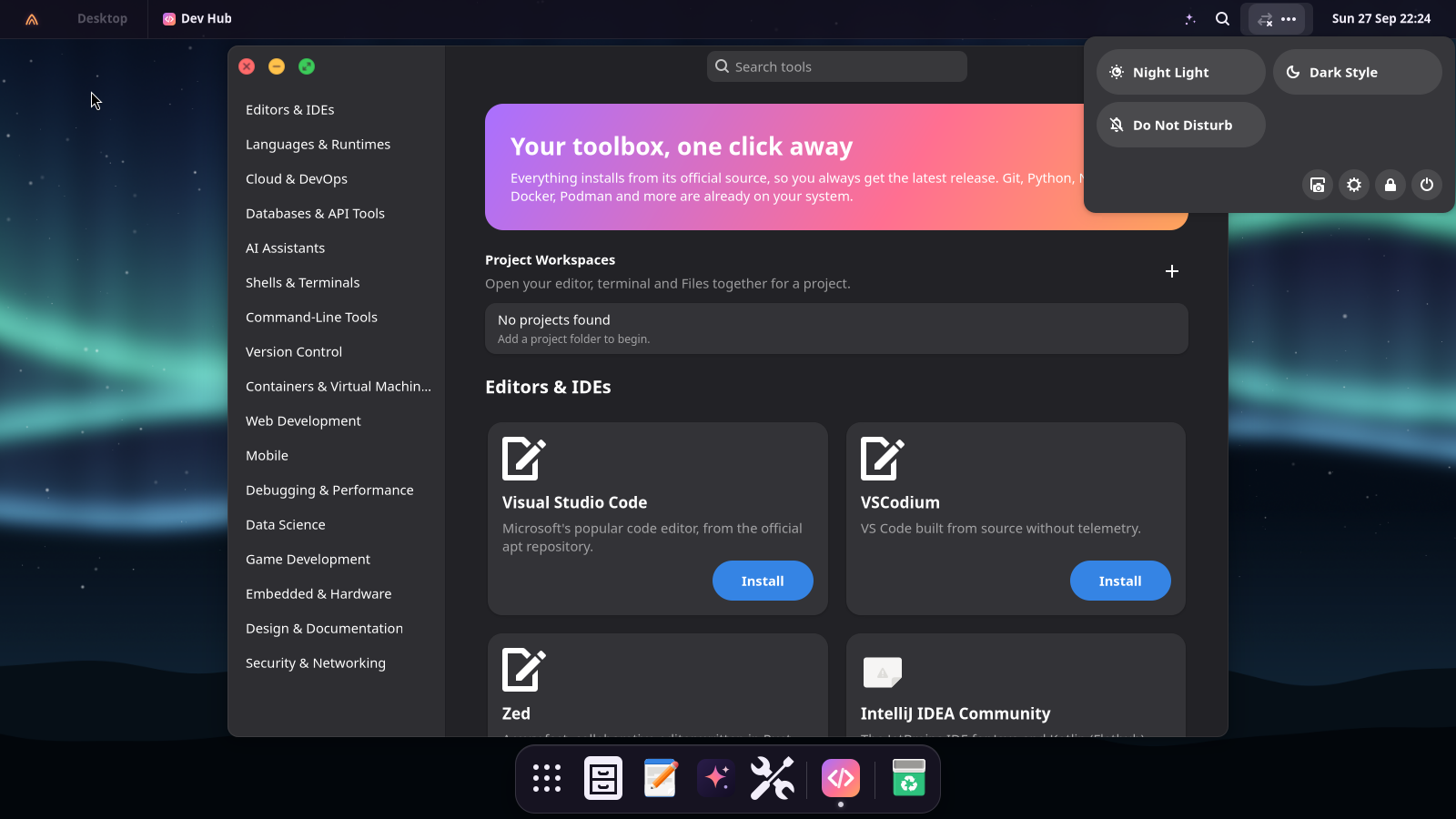
Dev Hub: your toolbox in one click

About 90 tools in 17 categories: editors and IDEs, languages, shells and terminals, Git clients, containers and virtual machines, databases, web and mobile, debugging, data science, game engines, embedded, design and security. Each one installs from its official source, so you always get the newest release, and you see every step in a terminal. Project Workspaces reopen your editor, terminal and Files together. See them all →

Dev Hub with one-click installers

Ready to use

Everything you need, nothing you don't.

Aurora comes with the everyday apps you'd expect from a complete desktop, and App Center opens the whole Debian archive and Flathub when you want more.

🌐 Internet

Firefox · Mail (Geary) · Transmission · Remmina remote desktop

📄 Office

LibreOffice Writer, Calc, Impress · Document viewer · Text editor · Scanner

🗓️ Personal

Calendar · Contacts · Weather · Maps · Clocks · Calculator

🎵 Media

Music · Videos with codecs · Image viewer · Camera · Sound recorder · Screen recording

🛠️ System

Files · Settings · Terminal · App Center · Disks · Backups · Snapshots · System monitor · Logs

🎮 Games

Solitaire · Mines · Sudoku · Mahjongg

🪟 Snap Layouts

Super+Z shows six layouts, as in Windows 11: point at a zone to see where the window goes, click, and Snap Assist offers your other windows for the empty spaces. Super+T keeps a window on top.

🧩 Twenty-three widgets

To-do list, countdown, sun and moon, progress of the year, recent files and clipboard join the clock, weather, notes and gauges. Each has its own options, and a compact gallery adds them where there's room.

🌅 A picture a day

Backgrounds work like Windows' Personalize page: dynamic, a picture, a slideshow from any folder, a solid color, or Bing's, NASA's or Wikimedia's picture of the day with its story.

📲 Quick settings, Android style

The time on top, thick sliders and big tiles that light up in your accent color. The Aurora menu shows who you are and puts sleep, restart and shut down one click away.

🔑 Codes, copied

A notification with a one-time code gets a Copy 482913 button: no more squinting and retyping.

📊 Task Manager

Ctrl+Shift+Esc: apps and their processes, End Task, live performance graphs, startup apps and services.

🧹 Storage and Screen Time

See what fills the disk and free it in one click; Storage Sense cleans up by itself. Screen Time shows each app's day and reminds you at the limits you set.

📌 Pin it to the screen

Any screenshot can float above your windows while you work: Super+Shift+P, draw, done. Files resizes pictures and tells you which program keeps a file “in use”.

🔋 It thinks ahead

Battery Saver turns on by itself at 20%, Do Not Disturb during games, videos and screen sharing, and Spotlight runs “restart” or opens ~/Documents as you type.

🎨 One look everywhere

GTK 4, GTK 3 and Qt apps, window borders and icons all follow your light or dark style and accent color, instantly.

🔔 It tells you what matters

Updates ready, battery low, a USB drive plugged in, a screen recording saved. The Activities menu tracks transfers, downloads and installs, with failures you can inspect.

🔐 A lock screen you'll like

A big clock over your wallpaper, a clean password field, and automatic locking when you step away.

🔒 Secure by default

Firewall on, automatic security updates, full-disk encryption in the installer, Secure Boot on installed UEFI systems, no telemetry.

💻 Runs on your hardware

Firmware for Intel, AMD, Realtek, Broadcom and MediaTek; Wi-Fi, Bluetooth, fingerprint readers, touchpads; guest tools for QEMU, VMware and Hyper-V.

⏪ Undo a bad update

Aurora takes a system snapshot before every update. If something breaks, pick Aurora OS snapshots in the boot menu and start yesterday's system. Your files are never touched.

📝 Text from any picture

Screenshots offer Annotate and Copy Text. Super+Shift+T copies the text inside any part of the screen, offline, in 18 languages.

📱 Your phone, connected

With KDE Connect your Android phone or iPhone shows its notifications on the desktop, and you can share files and the clipboard. It's one switch in Settings.

☁️ Weather and calendar

Click the clock for your calendar, notifications and today's weather with the next hours. No account needed.

👆 Fingerprint

Set up your finger in Settings → Users and use it instead of the password for sudo and admin prompts.

🎶 It sounds like Aurora

A warm marimba motif when you log in and a gentle goodbye when you shut down. Both are original, and one switch turns them off.

🖼️ Icons made for Aurora

Apps, violet folders with an emblem for Home, Downloads or Music, and every file type as a page with its label (PDF, PY, ZIP, DOC…). Famous brands keep their own logos.

✨ Gentle animations

Windows fade in as they open and files float in as a folder opens. One switch in Appearance turns them off.

♿ Accessible to everyone

Zoom the whole screen or a lens with Super+Alt+8, a screen keyboard, larger text and pointer, high contrast, reduced motion, a screen reader and visible scrollbars.

⚙️ Settings for every day

Automatic suspend, power button and lid, battery percentage, sound balance, notifications per app, what to do with a USB drive, a Compose key, online accounts, what Spotlight shows.

🔘 Buttons that say what they do

The round colored window buttons always show ×, − and arrows to expand or restore, not only on hover.

♻️ Safe to experiment

Backups with Déjà Dup, compressed RAM swap, and Flatpak apps that never touch the system.

Download

Get Aurora OS 0.1

Aurora OS 0.1 “dawn”

64-bit PC (x86-64)2.4 GB ISOTry live, then install

No USB stick at hand? Try it in a virtual machine →

What you need

  • 64-bit Intel or AMD processor
  • 4 GB RAM (2 GB minimum)
  • 20 GB of disk space to install
  • A USB stick of 4 GB or more
Verify your download (recommended)

In the folder where you saved both files, run:

sha256sum -c aurora-os-latest-amd64.iso.sha256

On macOS use shasum -a 256 -c …; on Windows, certutil -hashfile aurora-os-VERSION-amd64.iso SHA256 and compare.

Install guide

From download to desktop in five steps.

The full guide, with undoing updates, sharing and troubleshooting →

  1. Write the ISO to a USB stick

    Install balenaEtcher, choose the Aurora ISO, choose your USB stick and click Flash. (Rufus in DD mode and Ventoy work too.)

  2. Boot from the stick

    Restart and press the boot-menu key while the logo appears (usually F12, F10, F9, Esc or Del), then pick the USB stick. Both UEFI and legacy BIOS work. If your PC uses Secure Boot, switch it off to start the live USB; you can switch it back on after installing.

  3. Try or Install

    The Aurora menu offers Try Aurora OS (runs from the stick, touches nothing), Install Aurora OS (opens the installer right away) and a Language menu with 20 languages. From the live desktop you can install any time from the dock.

  4. Follow the installer

    Pick your language, your location on the map and your keyboard. Then choose how to use the disk: erase it, install alongside Windows or another Linux, or partition manually, with optional encryption. Finally create your user and choose whether to log in automatically. Keep the default btrfs file system to get automatic snapshots. Installation takes a few minutes and works offline.

  5. Restart and enjoy

    Remove the stick when asked. The Welcome app greets you on first login. Open Dev Hub to add your favorite tools, or App Center for everything else.

Under the hood

Every technical choice, explained.

Why Debian, why labwc, why Python and GTK 4, why Calamares, Ptyxis, PipeWire, gtklock… For every component we document what we picked, what else we considered and why, so you can trust (and challenge) how Aurora is built.

Read the technical overview

At a glance

  • Debian 13 · Linux 6.12 LTS · systemd
  • Wayland · labwc (wlroots)
  • Python 3 · GTK 4 · libadwaita
  • PipeWire · NetworkManager · BlueZ
  • Calamares · GRUB · Plymouth
  • Flatpak + apt · ufw · unattended-upgrades
  • btrfs · Timeshift · grub-btrfs

FAQ

Questions, answered.

Is Aurora OS free?

Yes, free as in beer and as in freedom. Aurora's own code is GPL-3.0-or-later, and everything else is open source from Debian and upstream projects.

Is it based on Ubuntu?

No, on Debian 13 "trixie", the same base Ubuntu itself comes from. You get Debian's packages and security updates, with no snaps. Almost every guide for Debian or Ubuntu applies.

How do updates work?

Security updates install automatically in the background, and App Center shows the rest. The kernel is the 6.12 long-term release with regular fixes. Newer kernels for brand-new hardware are available from Debian backports.

Can I install apps from Flathub, or .deb files?

Both. Flathub is enabled in App Center out of the box, and you can install any Debian package or a vendor's .deb with a double-click or apt.

What if an update breaks something?

Restart and choose Aurora OS snapshots in the boot menu. You'll find a snapshot from right before every update. Start it, check that all is well, then make it permanent with one click in Timeshift. This needs the btrfs file system, which is the installer's default.

Does Aurora send any data anywhere?

No telemetry, ever. The only requests the desktop makes on its own are the weather in the calendar (only your time zone's main city is sent, and it can be turned off), today's exchange rates when you type a currency conversion, and update checks with Debian's mirrors.

Will it run next to Windows?

Yes. Choose Install alongside in the installer and drag the divider to share the disk. A boot menu lets you pick the system at startup.

What about NVIDIA graphics?

The open-source driver works out of the box. For NVIDIA's own driver, install nvidia-driver from App Center or apt; Aurora ships the nvidia-detect tool to tell you which one fits your card.

Why must Secure Boot be off to start the USB?

The live USB's boot loader isn't signed yet. Once installed, Aurora on UEFI uses Debian's signed boot chain, so you can turn Secure Boot back on. A signed live USB is on the roadmap.

Does it look like a Mac? Is that allowed?

Aurora is inspired by macOS's layout. Every icon, font, wallpaper and line of code is our own or comes from open-source projects. Aurora isn't affiliated with Apple.

Ready when you are

Your next desktop
is one download away.

Try it live from a USB stick or a virtual machine. Nothing changes on your computer until you decide to install.